
Keep on dancing
The art of gathering as resistance

Welcome to Mother’s Gonna Work it Out – a newsletter not just for mothers with children, but for everyone who cares for anyone. All previous posts are here.
On a freezing afternoon in Belgrade, the gun-metal sky a perfect match to my concrete surroundings, I walked through a graffitied underpass towards a big blue door. Close up, I could hear the rumble of banging techno emanating from within. I’d found the spot.
I’d come to Serbia to dance – but not just to dance. I’d travelled to Belgrade from Novi Sad that morning after attending a festival called ‘Dancing in the Streets’. The gathering was inspired by the student-led protests that lit up the country after Novi Sad’s train station canopy collapsed in 2024 and killed 16 people.
‘Dance music creates spaces of freedom – inside us and outside on the streets,’ said the organisers of the festival, Elektrograd Collective, in their press release. ‘In difficult times, music inspires us and dancing lets us express ourselves.’
My friend and author Matthew Collin is part of Elektrograd. Matthew and I became friends after I read his book Rave On, and got in touch to discuss making a film inspired by his research. Rave On explores the power of electronic dance music to inspire societal change, and its journey to becoming a global phenomenon.
I’ve long been a believer in the power of music and dance to create spaces of freedom and self expression – and to effect political change. Since becoming a parent, I’ve also felt the significance of making inter-generational connections in these spaces; learning from those who’ve been around for a bit longer, and inspiring agency in those who are just starting out on their journey.
Matthew asked if they could screen a short film of mine at the festival, which is what brought me to Serbia. It’s called Vogue Beirut and tells the story of Hoedy, a Lebanese dancer, who’s teaching his country to vogue. ‘By dancing, I’m charging myself so I’m ready to face the world again,’ he says, as the film draws to a close.
The festival was a joy. Matthew’s crew is delightful. Inside a community arts space in a scruffy modernist house with a vase of flowers painted in primary colours on its façade, we gathered to put the world to rights. Through a fog of cigarette smoke, we admired photographs pasted on the walls from well-known UK rave culture chroniclers Mattko and Dave Swindells, among others.
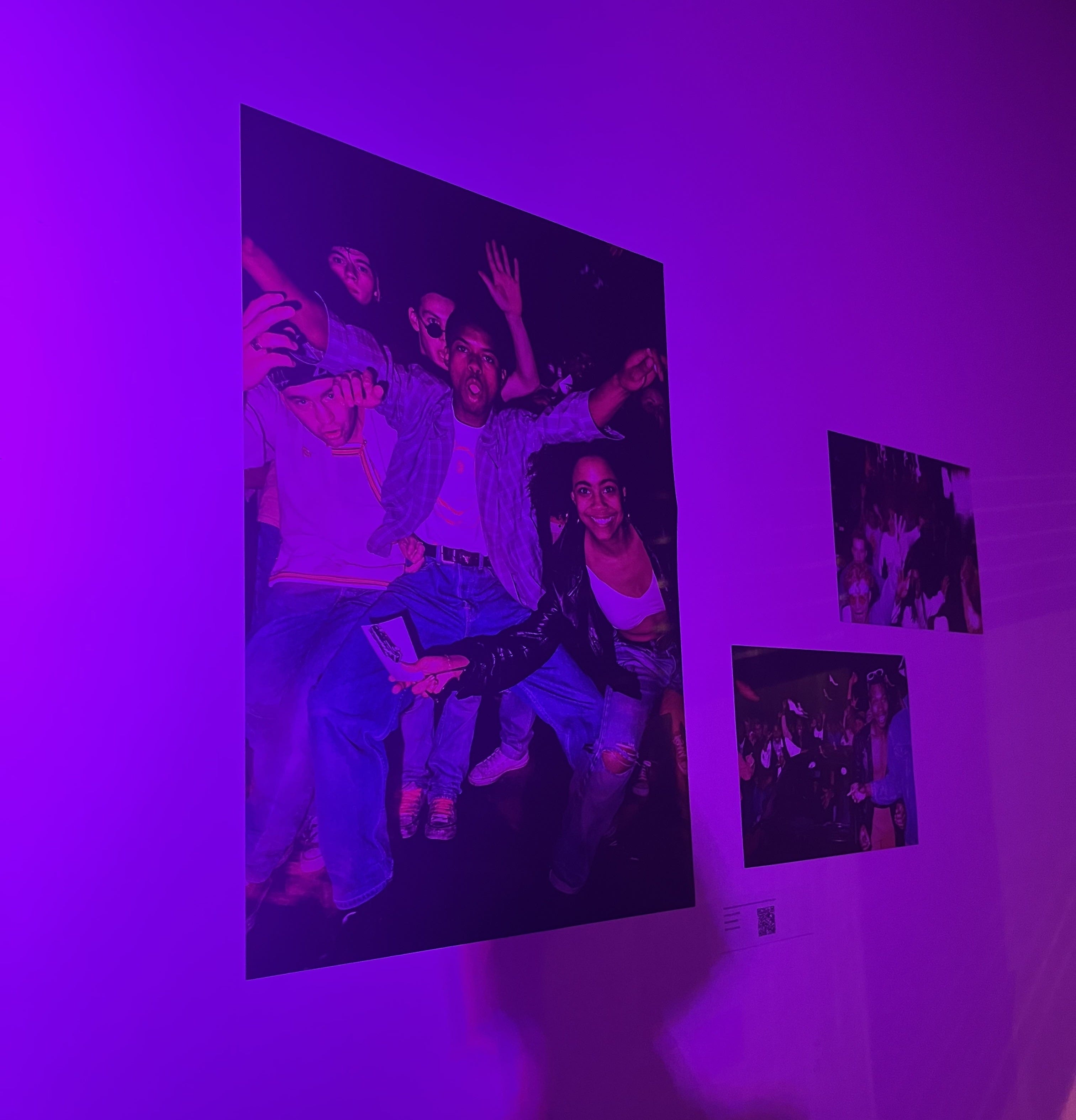
When it was time to watch the films, we settled into plastic chairs to see the story of a sound system in post-siege Sarajevo, a portrait of Palestinian techno DJ Sama’ Abdulahadi, a meditation on Tblisi’s fight for freedom, and some incredible voguing from Hoedy.
Afterwards, we danced to DJ Brka’s amazing selection of obscure disco, jacking house and uplifting soul. He’s one of Serbia’s finest DJs and co-founder of Disco Not Disco, a popular Belgrade club night. It didn’t matter that I only had a couple of words in Serbian to offer, and was meeting people for the first time. It felt like we already knew each other.
The next day, with a banging headache, I got the train to Belgrade. A greasy burek went some way to tame the hangover, along with the promise of another party. My new friends had put me onto a club with a big blue door, Para Klub, where Brka’s Disco Not Disco co-founder Schwabe was playing.
Belgrade felt a world away from charming Novi Sad and its cobbled streets and colourful new-classical buildings, although there’s a particular charm to its mix of socialist blocks, art nouveau buildings and Orthodox churches. I walked up to the Kalemegdan Fortress, which overlooks the confluence of the Sava and Danube rivers, to admire the view and sneak a photo of the Vladimir Putin socks on sale alongside the fridge magnets and woolly hats.
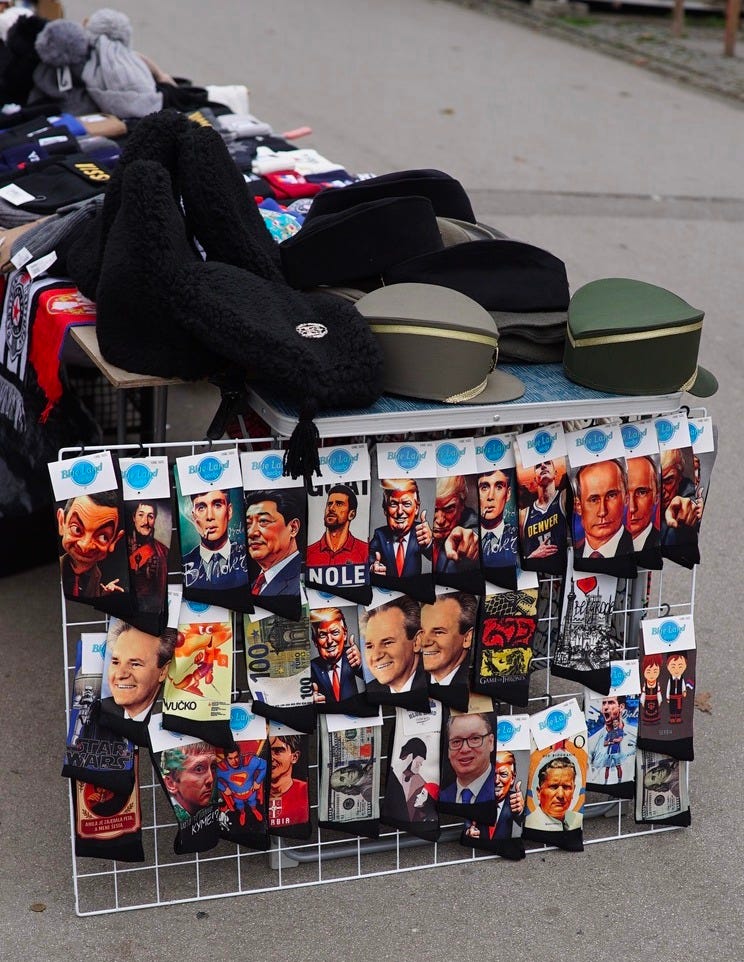
Caught between a bid for EU candidacy, a close relationship with Russia, and a continuing – although dwindling – anti-government protest movement, Serbians have a lot to contend with. The streets were peaceful, but the street art told a different story.
In Academic Park, one of the oldest green spaces in Belgrade, someone had tagged the name of neo-nazi group, Combat 18, on the beautiful rococo-style wall with an accompanying swastika. Then someone else had crossed it out and written ‘death to the fascists’, to which another person had added, ‘let the party live.’ This is a really interesting read about how Belgrade’s walls are layered with history, ideology, and unresolved conflict.
There is clearly a huge amount of frustration. So what was I going to find at the club?
I pushed the blue door open to be shouted at in Serbian by a man in a vest. He switched to English to advise me entry was cash-only, and pointed me in the direction of the front desk and coat check. I handed over some dinars and followed the sound of the music down into a smoke-filled concrete bunker. Illuminated by flashes of green lasers, I saw people mostly on their own, eyes closed, dancing. The sound system was impeccable, and I settled myself among the students, seasoned ravers, smartly dressed women and tight-shirted men, all together on the dance floor.
As author Rebecca Solnit writes: ‘There is a sense of belonging that goes deeper than words when we are with people who care about us, and even more so when we are in alignment, whether it’s two people falling into step on a walk or a dozen dancing together or a congregation praying or 10,000 marching together.’
I stayed until the end without talking to a single person, but it felt like we were all speaking the same language.
Let’s keep on dancing.